
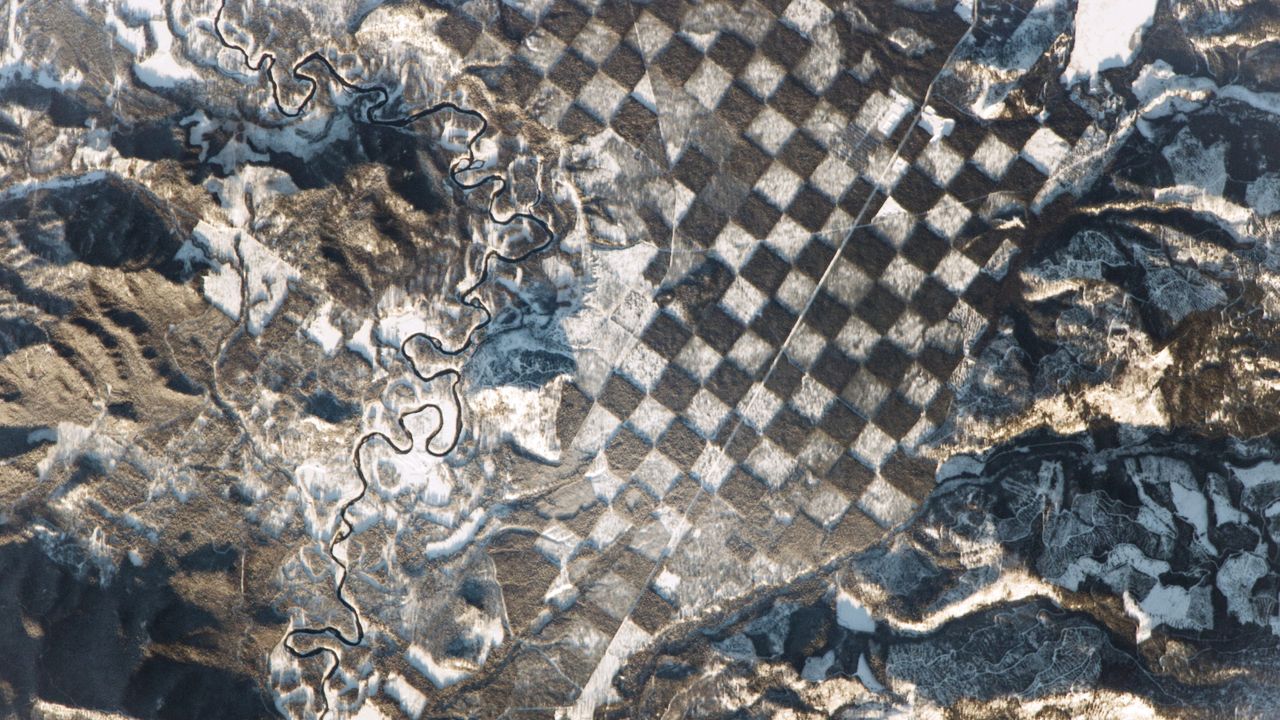
From the vast expanse of space, *planet earth* reveals its secrets in surprising ways. One such enigma recently captivated observers: a colossal "chessboard" pattern meticulously laid out around a river in Idaho, just south of the Canadian border. This striking aerial view, captured by an astronaut in 2017, presents an almost otherworldly spectacle, begging the question of its origin and purpose on our diverse globe. It's a bizarre yet beautiful testament to patterns both natural and, as we shall see, surprisingly human-made, etching a unique mark onto the landscape of our *planet earth*.
Initially, one might assume such a precise grid must be a geological anomaly or some advanced agricultural project. However, the truth behind Idaho’s checkered landscape is far more rooted in history and human ingenuity. This distinctive pattern isn't a modern marvel but a legacy of forest management practices initiated way back in the 1800s. Early settlers and foresters, with an eye towards sustainable resource use and controlled growth, began implementing a systematic approach to logging and reforestation, creating a patchwork that, from above, resembles a giant game board.
The rationale behind this century-old endeavor was multifaceted. Beyond simply harvesting timber, these early forest management strategies aimed to prevent catastrophic wildfires by creating natural firebreaks, promote healthy forest regeneration, and ensure a continuous supply of wood resources for future generations. By clearing sections in a checkerboard fashion, the land was managed in careful cycles, allowing some areas to regrow undisturbed while others were harvested or protected. This foresight, implemented without the benefit of modern satellite imagery, showcases a remarkable long-term vision for environmental stewardship and economic sustainability.
What’s truly fascinating is how this historical human endeavor, designed with ground-level practicality in mind, translates into such a profound visual statement when viewed from orbit. It serves as a powerful reminder of humanity's enduring capacity to shape the natural world, sometimes on a scale so grand it becomes visible only from hundreds of miles above. These deliberate alterations to the landscape, born out of necessity and planning, become an unwitting part of *planet earth*'s artistic tapestry, a silent dialogue between past generations and the future they helped cultivate.
In essence, the Idaho "chessboard" is more than just an unusual photograph; it's a living archive of human interaction with the environment. It tells a story of strategic resource management, adaptation, and the unexpected beauty that can arise from methodical planning. As we gaze upon such images from space, we gain a new perspective on our planet and our role within it, prompting reflection on both the visible and invisible imprints we leave behind and the ongoing responsibility we hold for the intricate systems that support life on *planet earth*.
Sources: Source


0 Comments